
Quantum Computing ETF Explained: Smart Investing in 2025
If you want to invest in the future of technology but don’t want to guess which company will win a quantum computing ETF is a smart choice. It let you hold shares in many companies at once which makes investing less stressful. In this guide, I’ll walk you through how these funds work and why they could be a good fit for your portfolio.
What is a Quantum Computing ETF
Think of a quantum computing ETF like a basket of tech companies. Instead of putting all your money into one risky stock, you spread it across several. That way, if one company struggles, others may balance it out.
Most funds include businesses that build quantum machines, write software, or supply chips and cloud services. Some also hold bigger tech names connected to AI and computing.
Why Quantum Computing Matters for Investors
Quantum computers handle problems that are impossible for normal computers. IBM, Google and Microsoft already let people test quantum tools online. These systems could speed up drug research, make data safer, and even help banks with complex modeling.
That’s why investors are excited. Experts predict the market could grow to over $100 billion by the 2030s, with big changes expected in medicine, energy and finance.
Key Companies in Quantum ETFs
Quantum ETFs usually mix well-known tech firms with ambitious startups. Examples include:
- IBM – Building quantum machines and cloud access.
- Alphabet (Google) – Known for a landmark experiment.
- Microsoft – Runs Azure Quantum for developers.
- Intel – Makes specialized computer chips.
- D-Wave Systems – Focused on a unique approach called quantum annealing.
- Rigetti Computing – A startup working on advanced systems.
IBM’s roadmap looks strong, while smaller firms like Rigetti bring fresh ideas to the table.
Quantum Computing ETF List
Here are some popular funds that investors often look for:
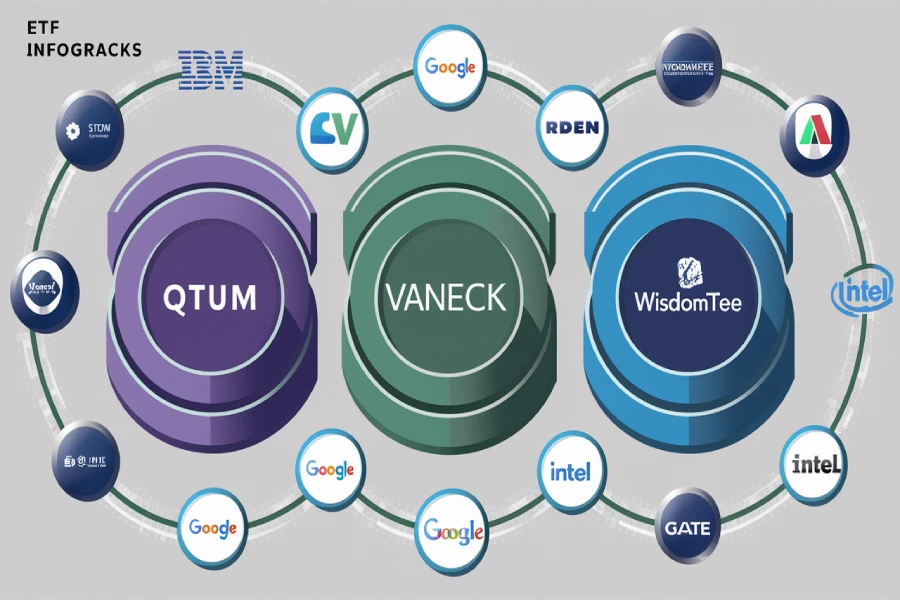
- Defiance Quantum ETF (QTUM)
- VanEck Quantum Computing UCITS ETF (ISIN: IE0007Y8Y157, tickers QUTM / QNTM)
- WisdomTree AI & Innovation Fund (WTAI)
Many people search for a Quantum Computing ETF Vanguard but Vanguard doesn’t offer one yet. Instead, it has broad tech funds that might include a few quantum-related companies.
Comparison: Best Quantum Computing
| ETF Name | Ticker | Annual Fee | Number of Companies | Focus | Example Companies |
|---|---|---|---|---|---|
| Defiance Quantum ETF | QTUM | ~0.40% | 70+ | Quantum + AI + Cloud | IBM, Nvidia, Microsoft |
| VanEck Quantum Computing UCITS ETF | ISIN IE0007Y8Y157 (QUTM / QNTM) | ~0.55% | 30 | More focused on quantum leaders | Alphabet, IonQ, Rigetti, Intel, Samsung |
| WisdomTree AI & Innovation Fund | WTAI | ~0.45% | 40+ | AI + innovation with some quantum | Alphabet, Intel, Meta |
QTUM is broad and affordable.
VanEck is the most focused on quantum.
WisdomTree mixes quantum with other future-tech themes.
Quantum Computing Price and Performance
These ETFs trade like normal stocks, so their price moves daily.
- Defiance QTUM: around $110, with a one-year range of $61 to $111.
- VanEck Quantum Computing UCITS ETF: in euros, usually between €20–€30.
- WisdomTree AI & Innovation ETF: generally $20–$30.
They can soar when tech markets heat up but also fall hard when things cool down.
Benefits of Quantum Computing
- You spread your money across many companies.
- They’re easy to buy and sell like stocks.
- You get exposure to both tech giants and startups.
- They’re linked to one of the fastest-growing tech fields.
The best part? You can invest in quantum’s future without needing to understand every detail of quantum physics.
Risks and Challenges to Know
Quantum computing is exciting, but it’s still early. Many companies don’t make steady profits yet, so prices can swing a lot.
Here are the big risks:
- Technology hurdles: building stable quantum computers is very hard.
- Not enough talent: few experts are trained in this field.
- Global race: countries like the U.S., China, and those in Europe are competing to lead.
These ETFs are best kept as a small part of your portfolio because of their high risk.
Quantum Computing Holdings
When you invest in one of these ETFs, here’s what you usually get:
- Core innovators: IBM, Rigetti, IonQ, D-Wave.
- Support companies: Intel, Nvidia, AMD, Synopsys, Samsung.
- Cloud leaders: Microsoft, Alphabet, Amazon.
As of August 2025, VanEck’s quantum computing ETF holdings include IonQ, Synopsys, Rigetti, D-Wave, Alphabet, Intel, Samsung, and Siemens.
Government and Corporate Investment
Governments are spending billions on quantum research. The U.S. National Quantum Initiative put more than $1 billion into research. The EU Quantum Flagship budget is about €1 billion, and China is building the world’s largest quantum research center.
Tech giants like IBM, Google, and Amazon are also investing billion which gives investor more confidence in the long-term potential.
Quick Glossary: Simple Meanings of Common Terms
| Term | Simple Meaning |
|---|---|
| ETF | A basket of many stocks you can buy like one. |
| Ticker | The short code used to find a stock or ETF (like QTUM). |
| Expense Ratio (Annual Fee) | The yearly fee charged by the ETF manager. |
| Holdings | The companies inside the ETF. |
| UCITS | A European rule that makes ETFs safe and standard. |
| Price Range | The highest and lowest prices in the past year. |
| Diversification | Spreading money across many companies. |
| Volatility | How much the price moves up and down. |
| Pure-play ETF | An ETF focused only on one theme (like quantum). |
| Thematic ETF | An ETF covering a future trend such as AI or robotics. |
FAQs
Q1: What is a quantum computing ETF?
Ans: A quantum computing ETF is a fund that invests in many companies working on quantum computers, chips, and related tech. Instead of picking one stock, you own a basket of companies, which lowers risk.
Q2: Does Vanguard have a quantum computing ETF?
Ans: No, Vanguard does not currently offer a dedicated Quantum Computing ETF Vanguard. However, Vanguard has broad tech funds that may include a few companies connected to quantum research.
Q3: Which is the best quantum computing ETF in 2025?
Ans: The most popular choices are Defiance Quantum ETF (QTUM) and VanEck Quantum Computing UCITS ETF. QTUM is broad and affordable, while VanEck is more focused on quantum leaders.
Q4: What companies are in quantum computing ETF holdings?
Ans: Typical quantum computing ETF holdings include IBM, Google, Microsoft, Intel, IonQ, Rigetti, and D-Wave. These funds mix big tech giants with smaller startups.
Q5: Are quantum computing ETFs risky?
Ans: Yes, they are considered high-risk investments. Quantum computing is still new, and many companies don’t earn steady profits yet. Prices can swing, so most experts suggest keeping them as a small part of your portfolio.
Conclusion
Quantum computing ETFs are one of the easiest ways to take part in a fast growing area of technology. They give you exposure to both big companies and new startup while lowering the risk of betting on just one.
They’re risky, but if you keep them as a small part of your portfolio and think long-term, they can add unique value.
At first I felt lost in technical terms, but ETFs made investing in quantum simple. If you want a balanced way to be part of future tech, starting with a quantum computing ETF makes sense.
“For more insights into future-focused investing, check out our detailed guide on AI and Innovation ETFs on FineGLOB