
Autonomous Vehicles: The Future of Safer and Smarter Travel
I have always been curious about how technology change the way we live and autonomous vehicles are one of the most exciting example. These self driving cars promise safer roads, less stress and more freedom for people who cannot drive. So what is an autonomous vehicle and how does it work? Think of it as a car with digital eyes and a brain using sensors, camera and map to act like a careful driver.
What Are Autonomous Vehicle?
An autonomous vehicle, also called a driverless car, can handle driving on its own in certain conditions.
Some real autonomous vehicles examples are:
- Tesla cars with Autopilot (still need human attention)
- Waymo robotaxis in certain parts of Phoenix
- Cruise shuttles in San Francisco
- The Uber autonomous vehicle project which Uber later sold to Aurora Innovation
I still remember when I first tried adaptive cruise control. The car slowed itself down when traffic changed and I didn’t even touch the brake. It was a small glimpse of how cars are already getting smarter.
Understanding Autonomous Vehicles Levels
Experts use levels to describe how self-driving a car really is:
| Level | What It Means | Example |
|---|---|---|
| 0 | Human drives completely | Regular cars |
| 1 | Car helps a little | Cruise control |
| 2 | Car assists more but driver stays alert | Tesla Autopilot |
| 3 | Car drives in limited cases human ready | Honda Legend (small release in Japan) |
| 4 | Car drives on its own in certain zones | Waymo robotaxis |
| 5 | Car drives everywhere with no human input | Still in testing |
Most cars today are at Level 2. From my view even these features make driving safer and less tiring.
How Autonomous Cars Technology Works
Here’s a simple way to picture autonomous moving technology:
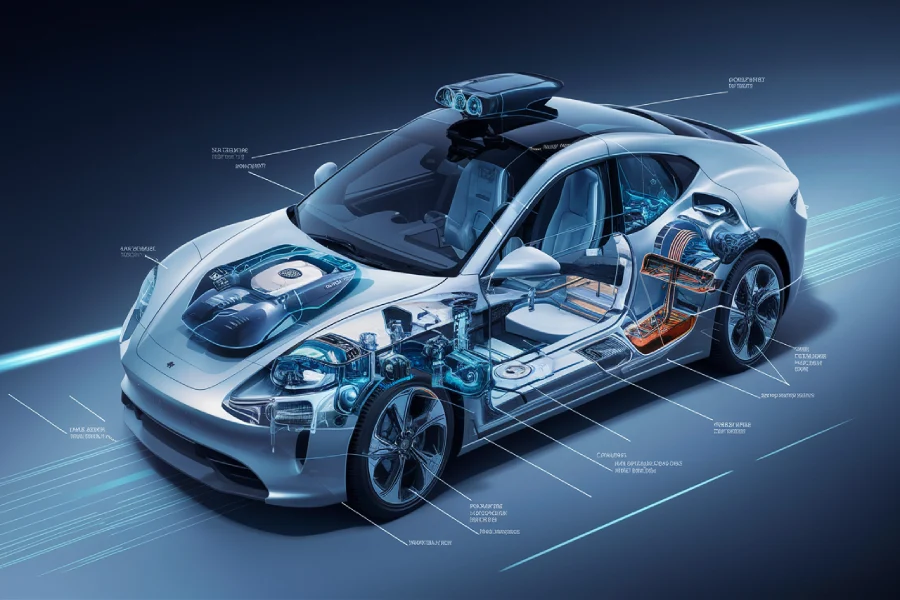
- The car looks around with sensors like cameras, radar and lasers.
- It figures out what’s nearby cars, people or signs.
- It checks exactly where it is on a detailed map.
- It guesses what might happen next like if a person is about to cross.
- Finally it decides whether to stop, turn or keep moving.
I once rode in a demo car that braked for a pedestrian before I even noticed them. That moment made me realize just how sharp these systems can be.
Sensors: The Car’s Eyes and Ears
Each sensor has its own strengths:
- Cameras: Like our eyes great detail but struggle in glare or fog.
- Lidar: Like a 3D scanner very precise but expensive.
- Radar: Like bat signals works in rain and snow but less detailed.
The smartest systems use all three together covering each other’s weak spots.
Maps, AI and Car to Car Talk
These vehicles don’t just rely on GPS. They use HD maps so detailed they include lane widths, curbs and even traffic lights.
They also practice car to car talk (V2X). Imagine one car warning another about a red light ahead or an accident around the corner. I believe this kind of sharing will make traffic smoother and safer.
Autonomous Vehicles Research, Projects and PPTs
Across the world, autonomous vehicles research is exploring safety, AI and traffic efficiency.
Students also get involved with autonomous vehicles project ideas like building small robotic cars, simulating traffic or creating an autonomous vehicles ppt to present in class. I’ve seen students use simple sensors to teach how cars can follow lanes or avoid objects it’s both fun and educational.
Safety and Testing
For me safety is the most important piece. Companies follow international guidelines like ISO 26262, ISO 21448 (SOTIF) and UL 4600. These aren’t strict global laws yet but they guide engineers.
Testing usually goes step by step: start with computer simulations, then move to test tracks, then small public trials and finally services in limited areas. In my opinion safety data should be open to the public so people know how these cars are really performing.
Challenges on the Road
Even the smartest self-driving cars struggle with tricky situations:
- Snow hiding road lines
- Police giving hand signals
- Emergency vehicles cutting through traffic
- Kids suddenly running into the street
That’s why backup systems are essential. Cars must either stop safely or give control back to the driver when things get too uncertain.
Laws and Responsibility
The question many ask is “Who’s at fault if a driverless car crashes?”
In the US each state has its own rules. Europe is more cautious and puts strong focus on privacy and safety. China meanwhile is moving quickly with large scale trials.
I believe autonomous vehicles companies should share responsibility for accidents in the early years. That’s the only way drivers will truly feel safe adopting them.
Leading Autonomous Vehicles Companies
Some of the most important autonomous vehicles companies today are:
- Tesla – Autopilot and Full Self Driving (Level 2 driver assist)
- Waymo – Running Level 4 taxis in certain Phoenix neighborhoods
- Uber (Aurora) – Uber sold its AV unit to Aurora but still invests
- Cruise (GM) – Testing robotaxis in San Francisco
- Baidu & Pony.ai – Expanding in China
- Ford & GM – Both pushing into AV technology
I’d suggest following these companies if you want to track real progress.
Impact on Job and the Economy
Yes these vehicles could reduce costs but they might also affect truckers, taxi drivers and delivery workers.
On the positive side new jobs are growing in AI, software and maintenance. I think retraining programs are the best way to help workers move into these roles and make the shift fair.
Accessibility and Fair Use
I’ve seen how older relatives struggled with driving. Self-driving cars could give people like them and those with disabilities the independence they deserve.
But fair access matters. These services must not only run in wealthy neighborhoods. Cities need to make sure the accessibility benefits reach everyone.
Environmental Impact
Driverless cars could reduce pollution by driving more smoothly and cutting wasted fuel. Many are designed as electric which will help cities stay cleaner.
For now fleets are too small to make a big difference. The real benefits will show once shared electric AVs become common.
Case Studies and Examples
- Waymo in Phoenix: Level 4 taxis but only in specific areas.
- Uber Autonomous Vehicles Project: Shut down in 2020 sold to Aurora. Uber still supports the field through investments.
- Cruise in San Francisco: Robotaxis are running but closely regulated.
- Autonomous Trucks in Texas: Already moving goods in pilot programs.
In my opinion trucks and shuttles will likely scale faster than private AVs.
Myths and Fact
- Myth: Fully autonomous driving vehicles are already here.
- Fact: Most cars today are still at Level 2 or Level 3 and need drivers to stay alert.
- Myth: Self-driving cars never make mistakes.
- Fact: They reduce human error but still face challenges in rain, snow, or unusual road conditions.
- Myth: Autonomous cars will remove all traffic accidents.
- Fact: They can lower crash rates but technical faults and rare events still cause risks.
- Myth: Only tech giants like Google or Tesla are working on this.
- Fact: Automakers such as Ford, GM, Toyota, and startups worldwide are also building autonomous vehicles technology.
- Myth: Autonomous vehicles don’t need human oversight.
- Fact: Most systems today require drivers to take control if something goes wrong.
- Myth: Self-driving cars will instantly replace all driving jobs.
- Fact: Jobs may shift but new roles in AI, fleet management, and mapping will grow.
- Myth: Autonomous vehicles are too far away to matter.
- Fact: They are already being tested in Phoenix, San Francisco, and cities in China.
- Myth: All autonomous vehicles work the same way.
- Fact: Different companies use different mixes of cameras, radar, lidar, and AI for their systems.
FAQs
Q1. What is an autonomous vehicle and how does it work?
Ans: It’s a car that uses sensor, camera and map to drive itself in certain conditions.
Q2. Can autonomous vehicle work in bad weather?
Ans: Not yet, Rain and snow still cause problems.
Q3. Are autonomous vehicle safe?
Ans: Autonomous vehicles research shows they can lower human error accidents but they aren’t perfect.
Q4. What are some autonomous vehicle project ideas for students?
Ans: Mini robotic cars, traffic simulations or preparing an autonomous vehicle ppt.
Q5. Which are the leading autonomous vehicle companies?
Ans: Tesla Waymo Uber (Aurora) Cruise Baidu Ford GM.
Conclusion
People are both excited and nervous about autonomous vehicles technology. My opinion is that while full autonomy is still far away the steps being made today are already useful. AVs can make roads safer, help those who can’t drive and clean up our cities if they’re electric and shared.
My recommendation: stay curious but realistic. Try features like lane assist or adaptive cruise control, keep an eye on companies like Tesla and Waymo and ask questions about safety and fairness. Step by step we’re moving toward safer roads.
“For more detailed guides and insights on technology and innovation topics, visit FineGlob.com.”