
Zigbee vs Z-Wave: Complete 2025 for Smart Homes
When setting up a smart home one of the first choices is Zigbee vs Z-Wave. Both are popular wireless protocols that connect bulbs locks and sensors. With new standards like Matter and Thread emerging in 2025 many wonder: Does the difference between Zigbee and Z-Wave still matter in 2025?? The answer is yes both remain vital. In this guide we compare Zigbee or Z-Wave side by side explore real performance and help you decide which fits your smart home needs.
What Are Zigbee and Z-Wave?
This Zigbee & Z-Wave comparison shows both are key smart home protocols.”. Both are communication protocols for smart home automation. Zigbee uses the 2.4 GHz band offering higher speed but possible Wi-Fi interference. Z-Wave works on sub-GHz frequencies giving stronger wall penetration and stable range. Both rely on mesh networking where device pass signal across the network, Understanding devices helps explain why they are still the backbone of smart home worldwide.
Zigbee & Z-Wave interference with Wi-Fi
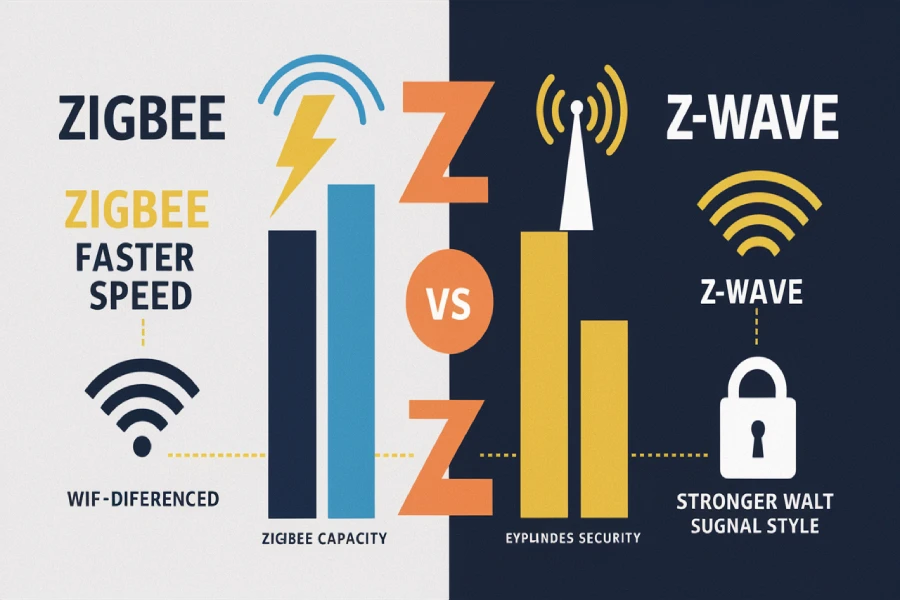
| Feature | Zigbee | Z-Wave |
|---|---|---|
| Frequency Band | 2.4 GHz global | Sub-GHz 868/908 MHz region-specific |
| Speed / Data Rate | 250 kbps faster | 100 kbps slower |
| Range per device | 35 ft indoor | 100 ft indoor better penetration |
| Device Capacity | Up to 65000 above devices | Up to 232 devices |
| Mesh Networking Hops | Unlimited | 4 hops |
| Cost / Availability | Cheaper widely available | fewer devices |
Both internet devices in simple terms: Zigbee is faster and more scalable while Z-Wave is slower but more reliable in larger homes.
Compatibility & Ecosystem
When choosing between Zigbee and Z-Wave device compatibility is key. Zigbee supports thousands of products from Philips Hue Aqara Sonoff and IKEA. Z-Wave has fewer options but excels in smart locks alarms and security devices. Both need a hub such as Home Assistant SmartThings Hubitat or Alexa. Hybrid hubs make Zigbee/Z-Wave less of a conflict since they let you mix both in one setup.
Range Speed & Reliability in Real Homes
The real test of Zigbee or Z-Wave happens in daily use. Zigbee is faster at 250 kbps and works well in apartments but may face Wi-Fi interference. Z-Wave is slower at 100 kbps but shines in multi-story houses with thick walls thanks to its sub-GHz band. For small flats Zigbee fits well. For large homes Zigbee vs Z-Wave comparisons often show Z-Wave as the winner in reliability.
Another common search is Zigbee or Z-Wave interference with Wi-Fi. This mainly affects Zigbee since it runs at 2.4 GHz.”
Mesh Networking & Scalability
Both rely on mesh networking but the Zigbee and Z-Wave gap is clear:
- Zigbee supports unlimited hops and up to 65,000+ devices ideal for large systems
- Z-Wave supports 4 hops and 232 devices making it simpler but limited
If you plan a huge ecosystem just shows Zigbee scales better.
Security & Privacy
“Security is critical in smart home protocols Zigbee and Z-Wave.”. Both use AES 128 encryption Z-Wave has the S2 framework while Zigbee 3.0 improve encryption and unifies older version. Past vulnerabilities such as the Z-Shave attack showed risk but certified hubs and firmware update make Zigbee/Z-Wave secure for smart homes.
Cost & Ownership Analysis
Cost is another major factor in these inventions Zigbee or Z-Wave. Zigbee devices are usually cheaper and easy to find. Z-Wave costs more but often delivers premium stability. Over time Zigbee can reduce ownership costs while Z-Wave may be pricier but reliable for locks and alarms. For budget setup my favour is for Zigbee.
Use-Case Based Recommendations
| Use Case | Best Option | Why |
|---|---|---|
| Lighting and bulbs | Zigbee | Fast cheap wide ecosystem |
| Sensors | Zigbee | Efficient low power |
| Smart locks and alarms | Z-Wave | Stable and secure |
| Large homes thick walls | Z-Wave | Better range |
| Hybrid setups | Both | Hubs allow Zigbee vs Z-Wave integration |
So which is better Zigbee or Z-Wave for smart locks? The answer is usually Z-Wave because of reliability In this Zigbee and Z-Wave for smart locks debate, Z-Wave is more reliable.
Regional & Compliance Factors
A hidden part of Zigbee vs Z-Wave is compliance. Zigbee works globally on 2.4 GHz but may overlap with Wi-Fi. Z-Wave varies by region 908 MHz in the US 868 MHz in Europe. A Z-Wave device bought abroad may not work at home. Always check regional support when comparing Zigbee vs Z-Wave for international setups.
“Zigbee vs Z-Wave vs Matter: 2025 Outlook
“Many buyers also compare Zigbee vs Z-Wave vs Matter before choosing their devices.”The future of Zigbee vs Z-Wave ties into Matter and Thread. Matter unifies ecosystems while Thread is a low-power mesh protocol. Zigbee and Z-Wave are not disappearing both connect to Matter through bridges. Brands like Aqara and Philips Hue already offer Zigbee to Matter support. Hub ensure Zigbee vs Z-Wave devices remain useful in 2025 and beyond.
Common Myths & Buyer Mistakes
- Myth: Zigbee vs Z-Wave interference is always a problem → Not true careful setup avoids it
- Myth: Z-Wave is outdated → Wrong Z-Wave 700/800 series is active
- Mistake: Ignoring house layout when choosing
- Mistake: Skipping updates leaving devices at risk
FAQs
Q1: What is the difference between Zigbee and Z-Wave?
Ans: Both with AES-128 encryption and strong frameworks
Q2: Which has better range?
Ans: In Zigbee or Z-Wave, Z-Wave wins for large homes while Zigbee is fine for apartments
Q3: Can Zigbee and Z-Wave work together?
Ans: Not directly but hubs can bridge them
Q4: Will Matter replace them?
Not soon Matter supports bridges for both devices
Q5: Which drains less battery?
Ans: Zigbee usually especially for sensors
Q6: How many devices do Zigbee and Z-Wave support?
Ans: Zigbee support 65,000 and Z-Wave support 232 devices
Conclusion
So which is better in Zigbee vs Z-Wave?
- Choose Zigbee for affordability speed and wide device support
- Choose Z-Wave for range reliability and secure locks
- For maximum flexibility pick a hub that supports both
In 2025 Zigbee versus Z-Wave is not about which one ends. It is about choosing what fits your home budget and future plans. Both remain powerful smart home protocols.
Want to explore more? Head over to FineGlob