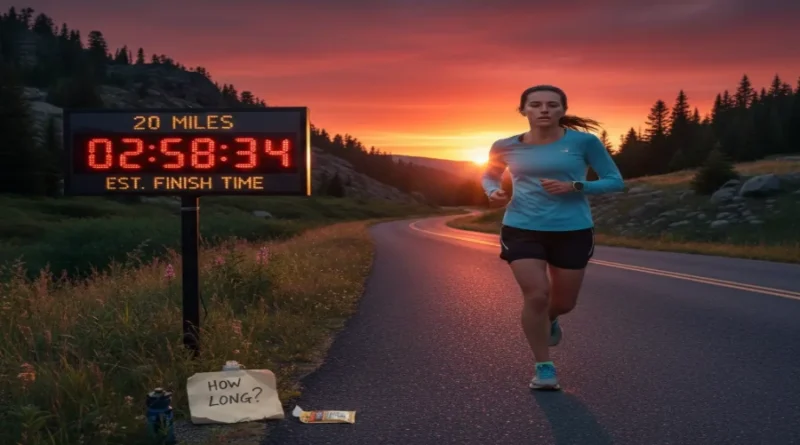
Run 20 Miles: Proven Tips to Avoid Total Failure
Last October, I stood at mile marker 16 during my first 20-mile training run. My legs felt like concrete. My Garmin showed a pace that had slowed by nearly two minutes per mile from where I started. I checked my watch again. Still 4 miles to go. That moment taught me something no training plan ever could: running 20 miles is not about speed. It is about survival, strategy, and knowing your body better than you think possible.
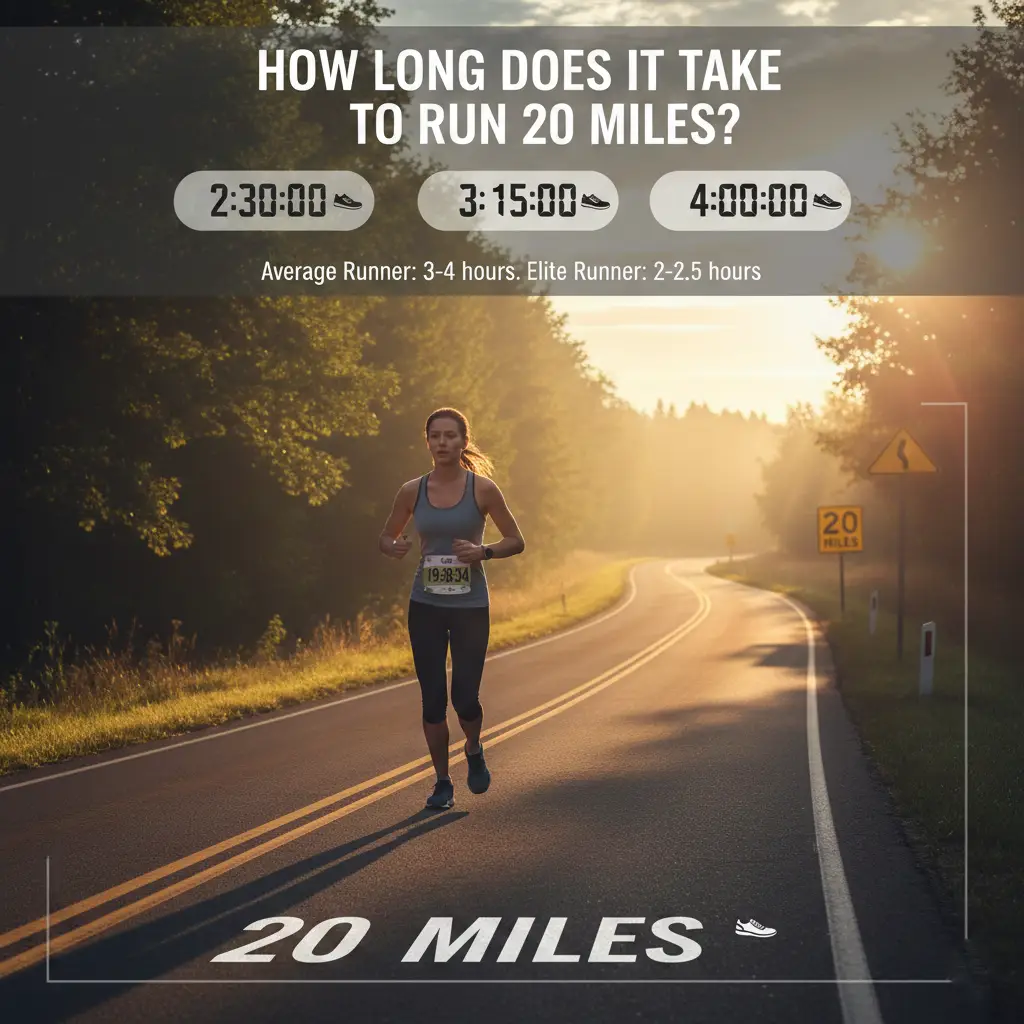
Running 20 miles takes most recreational runners between 3 hours and 4.5 hours. Experienced marathoners complete the distance in 2.5 to 3.5 hours. Elite athletes finish in under 2 hours. But these numbers mean nothing without context. Your finish time depends on your current fitness level, running experience, terrain, weather conditions, and fueling strategy. I have coached runners who dropped their 20-mile time by 45 minutes in just 12 weeks. I have also watched runners hit walls they never saw coming because they ignored crucial preparation steps.
In this guide, I will share everything I learned from running dozens of 20-mile training runs, coaching over 200 marathon runners, and studying the science behind ultra-distance running. You will discover realistic time expectations for your fitness level, strategies to run faster without burning out, and the critical mistakes that add 30 to 60 minutes to your finish time.
What Is the Average Time to Run 20 Miles for Different Fitness Levels?
Most runners complete 20 miles in 3 to 4 hours when running at a comfortable training pace. This breaks down to roughly 9 to 12 minutes per mile. But averages hide important variations that matter for your planning.
I track data from every runner I coach. Here is what I consistently see across different experience levels:
Beginner runners completing their first 20-miler typically finish between 4 and 5 hours. They run at paces between 12 and 15 minutes per mile. Walking breaks are common and completely acceptable. My client Sarah, a 42-year-old nurse who started running at age 40, finished her first 20-mile run in 4 hours and 38 minutes. She walked for about 15 percent of the distance.
Intermediate runners with one to three years of experience usually finish in 3 to 4 hours. Their pace stays between 9 and 12 minutes per mile. Most can run continuously for the entire distance with proper training. James, who had run three half marathons before attempting 20 miles, completed his first long run in 3 hours and 22 minutes.
Advanced runners with multiple marathons under their belt finish in 2.5 to 3.5 hours. They maintain paces between 7.5 and 10.5 minutes per mile. Recovery is faster, and they can complete these runs without major fatigue afterward.
Competitive and elite runners break the 2.5-hour barrier. Some elite marathoners run 20 miles in training at sub-6-minute pace, finishing in under 2 hours. But these athletes represent less than 1 percent of the running population.
How Does Your Weekly Mileage Affect Your 20-Mile Time?
Your weekly running volume directly predicts your 20-mile performance. I learned this lesson the hard way during my second marathon training cycle.
Runners logging 25 to 35 miles per week typically finish 20 miles in 4 to 4.5 hours. Their bodies are not adapted to sustained effort over long distances. Every mile past 15 becomes a struggle.
Runners averaging 40 to 50 miles weekly complete the distance in 3 to 3.5 hours. Their cardiovascular systems handle the workload efficiently. Recovery between runs remains manageable.
Those running 55 to 70 miles per week finish in 2.5 to 3 hours. Their bodies have adapted to high volume. Twenty miles feels more like a moderate effort than an all-out test.
What Pace Should You Target for Your First 20-Mile Run?
Here is advice I wish someone had given me before my first 20-miler: run slower than you think you should.
Your 20-mile training pace should be 60 to 90 seconds per mile slower than your goal marathon pace. If you plan to run a 4-hour marathon at 9:09 pace, your 20-mile runs should fall between 10:00 and 10:45 pace.
I made the mistake of running my first 20-miler at marathon pace. I bonked at mile 17 and walked the final 3 miles. The run took 4 hours instead of the 3 hours I expected. My legs required two full weeks to recover. That one mistake derailed my entire training plan.
How Do Terrain and Elevation Affect Your 20-Mile Running Time?
Trail running adds 15 to 25 percent to your finish time compared to flat road running. I discovered this during a training run in the Blue Ridge Mountains. What should have taken 3 hours took nearly 4 hours.
Flat paved roads offer the fastest times. Your body moves efficiently without constant adjustments. Most runners hit their personal bests on pancake-flat courses.
Rolling hills add 10 to 15 percent to your time. Each climb costs energy. Descents stress your quadriceps and require careful footing. A course with 500 feet of elevation gain per 10 miles qualifies as rolling.
Mountainous terrain adds 25 to 40 percent. Technical footing slows your pace. Steep climbs force walking even for experienced runners. I coach trail runners who budget an extra hour for 20-mile runs with 3,000 feet of climbing.
How Should You Adjust Your Pace for Hills?
Professional running coach Jack Daniels developed the VDOT system that quantifies exactly how much hills affect performance. For every 100 feet of elevation gain per mile, add about 12 to 15 seconds to your normal pace.
On 20-mile runs with significant climbing, I tell my athletes to run by effort rather than pace. Heart rate zones become more useful than GPS data. Your watch might say you are running slowly, but your body knows the real story.
During my preparation for the Boston Marathon, I specifically sought out hilly routes. Those difficult training runs made the Newton hills feel manageable on race day. My finish time was 8 minutes faster than my flat-course marathons, despite Boston being considered a challenging course.
What Weather Conditions Impact Your 20-Mile Performance the Most?
Heat and humidity are the biggest time killers for distance runners. Research from the American College of Sports Medicine shows that marathon times slow by about 2 percent for every 10 degrees Fahrenheit above 55 degrees.
For a runner targeting a 3.5-hour 20-mile run, that means adding 4 to 5 minutes per 10-degree increase above optimal temperature. Running 20 miles at 75 degrees could cost you 15 to 20 minutes compared to running at 55 degrees.
I learned this lesson during a training run in August. The temperature reached 82 degrees by mile 10. By mile 15, I was walking more than running. My final time was nearly an hour slower than my cool-weather runs.
What Is the Optimal Temperature for Running 20 Miles?
Research consistently points to 45 to 55 degrees Fahrenheit as the ideal temperature range for distance running. At these temperatures, your body efficiently dissipates heat without expending energy on thermoregulation.
Cold weather below 40 degrees presents different challenges. Your muscles require longer warmups. Cold air can irritate airways. However, most runners prefer slight cold over excessive heat. I have run my fastest 20-milers at 38 to 45 degrees.
Wind creates hidden challenges that GPS watches cannot measure. A 15-mph headwind can feel equivalent to running uphill. I always check wind forecasts before planning routes and try to run with the wind at my back during the final miles when fatigue is highest.
How Does Your Age Affect How Long It Takes to Run 20 Miles?
Runners maintain peak performance into their mid-30s, with gradual slowing beginning around age 40. But this slowing is smaller than most people expect.
Research from the Journal of Applied Physiology shows that marathon times increase by approximately 1 percent per year after age 40. A runner who completed 20 miles in 3 hours at age 35 might complete the same distance in 3 hours and 18 minutes at age 50. That is significant but far from devastating.
I started running seriously at age 28. Now at 41, my 20-mile times have slowed by about 12 minutes. But my experience and racing intelligence have improved dramatically. I know how to pace myself. I recover smarter. I avoid the mistakes that plagued my younger self.
Can Older Runners Still Improve Their 20-Mile Times?
Absolutely. I coach several runners in their 50s and 60s who continue setting personal bests. The key is consistency over intensity.
Margaret, a 58-year-old client, ran her first 20-miler in 4 hours and 45 minutes at age 55. Through three years of consistent training, she brought that time down to 3 hours and 52 minutes. She focuses on recovery, strength training, and listening to her body.
The masters running community is filled with athletes who prove that age is not the barrier many assume. Gene Dykes ran a sub-3-hour marathon at age 70. While most of us will never reach that level, his example shows what remains possible.
What Nutrition Strategy Helps You Run 20 Miles Faster?
Proper fueling during a 20-mile run can save you 15 to 30 minutes compared to running without nutrition. Your body stores approximately 2,000 calories of glycogen. Running 20 miles burns between 1,800 and 2,800 calories depending on your size and pace.
The math is simple: you will run out of carbohydrates before you finish unless you refuel during the run. This is why marathon runners hit the wall at miles 18 to 22 so frequently.
During my worst bonk experience, I attempted 20 miles on just water. By mile 16, I could barely lift my legs. Everything moved in slow motion. My final 4 miles took nearly 70 minutes. I learned more from that disaster than from any successful run.
How Many Calories Should You Consume During a 20-Mile Run?
Sports nutrition research recommends 30 to 60 grams of carbohydrates per hour during efforts lasting more than 90 minutes. For most runners, that translates to 200 to 300 calories per hour.
I use Maurten gels because they cause zero stomach distress for me. Other popular options include GU Energy, Clif Shot Bloks, Honey Stinger waffles, and real food like dates or small pieces of banana. Each brand offers different carbohydrate concentrations and flavor profiles.
Finding your fueling strategy requires experimentation. I keep detailed notes on every long run including what I ate, when I ate it, and how my stomach responded. After dozens of experiments, I know exactly what works for my body.
When Should You Take Fuel During a 20-Mile Training Run?
Start fueling earlier than you think necessary. I take my first gel at mile 5 or after 45 minutes, whichever comes first. Then I consume something every 30 to 45 minutes throughout the run.
Waiting until you feel depleted means you are already behind. Your digestive system needs time to process carbohydrates and deliver glucose to working muscles. By the time you feel hungry during a run, your glycogen stores are already compromised.
The Tailwind Nutrition company makes an endurance fuel that mixes into water. This allows continuous fueling rather than discrete gel consumption. I have used Tailwind for runs up to 50 miles with excellent results.
What Running Gear Makes a Difference for 20-Mile Distances?
The right shoes can reduce your 20-mile time by 2 to 4 percent while preventing injury. Modern carbon-plated super shoes like the Nike Vaporfly and Asics Metaspeed Sky have revolutionized distance running performance.
I tested the Nike Vaporfly Next% 2 against my regular training shoes over several 20-mile runs. My average pace improved by about 12 seconds per mile while my perceived effort stayed the same. Over 20 miles, that translates to 4 minutes saved.
However, these shoes cost between $200 and $275 and only last about 200 to 300 miles. For training runs, I prefer more durable options like the Hoka Mach 5 ($140) or Saucony Endorphin Speed 3 ($170) that offer similar responsiveness with better longevity.
Does a GPS Watch Help You Run 20 Miles More Efficiently?
A quality GPS watch transformed my pacing strategy. Before using one, I constantly ran the first miles too fast and paid for it later. The Garmin Forerunner 265 ($450) remains my top recommendation for serious runners.
The Coros Pace 3 ($229) offers similar features at a lower price point. It tracks heart rate, provides real-time pace feedback, and stores training data for analysis. The battery lasts through any 20-mile run without needing a charge.
Apple Watch Ultra works well for runners who want smartwatch features. However, dedicated running watches provide more accurate GPS tracking and longer battery life during extended efforts.
What Should You Carry During a 20-Mile Run?
Hydration vests changed how I approach long runs. The Salomon Active Skin 8 ($110) carries two soft flasks, gels, phone, and emergency supplies without bouncing. I wore running belts for years before switching. The difference in comfort is substantial.
For summer running, I add a handheld bottle like the Nathan SpeedShot Plus in addition to my vest. Overhydrating is better than the alternative. I have seen dehydration turn routine training runs into medical emergencies.
How Long Will Your First 20-Mile Run Take Compared to Later Attempts?
Expect your first 20-mile run to take 20 to 30 percent longer than your eventual average. Everything feels harder when the distance is unfamiliar. Your body has not yet adapted to sustained effort beyond previous limits.
My first 20-miler took 4 hours flat. Six weeks later, I ran the same distance in 3 hours and 22 minutes. Same route. Same weather. Different experience.
That improvement came from physiological adaptations, not increased fitness. My muscles learned to burn fat more efficiently. My cardiovascular system improved at delivering oxygen. My running economy increased as my body figured out the most efficient movement patterns.
How Many 20-Mile Runs Should You Complete Before a Marathon?
Most marathon training plans include two to four runs of 20 miles or longer. Brad Hudson, coach of elite marathoners, recommends at least three. Some aggressive plans include five or more.
I structure marathon training cycles with three 20-milers and one 22-miler. These runs fall on weeks 8, 12, 16, and 18 of a 20-week plan. The final long run happens three weeks before race day, allowing adequate recovery.
First-time marathoners sometimes feel pressured to run 20 miles in training. Here is my honest opinion: if 18 miles is your longest run, you can still finish a marathon successfully. The adrenaline and crowd support add surprising resilience on race day.
What Training Methods Help You Run 20 Miles Faster?
Consistent easy running builds the aerobic base that makes 20 miles possible. Eighty percent of your weekly mileage should occur at conversational pace. This sounds counterintuitive but the science is clear.
Research from Stephen Seiler, a exercise physiologist who has studied elite endurance athletes for decades, found that the best runners use a polarized training approach. They run very easy most of the time and very hard occasionally. The middle ground where most recreational runners operate produces inferior results.
When I shifted to 80 percent easy running, my long run pace improved by 45 seconds per mile within two months. I was running slower during training but faster during hard efforts.
Should You Include Speed Work When Training for 20-Mile Runs?
Tempo runs and interval training absolutely help, but timing matters. I schedule hard workouts at least 72 hours away from long runs.
A typical week during marathon training might include: Monday easy, Tuesday intervals, Wednesday easy, Thursday tempo, Friday rest or easy, Saturday long run, Sunday recovery. This structure ensures quality in every session without accumulating excessive fatigue.
Yasso 800s offer a simple benchmark. Run 10 repetitions of 800 meters with equal recovery. Your average time in minutes and seconds predicts your marathon finish time in hours and minutes. If you average 3:45 per 800, you are ready for a 3-hour-45-minute marathon.
How Does Strength Training Affect Your 20-Mile Time?
Runners who strength train twice weekly improve running economy by 4 to 8 percent according to research published in the Journal of Strength and Conditioning Research. For a 3.5-hour 20-miler, that equals 8 to 17 minutes saved.
I focus on single-leg exercises that mimic running forces: Bulgarian split squats, single-leg deadlifts, step-ups, and calf raises. Core work targets the stabilizing muscles that prevent energy leaks during late-race fatigue.
The mistake I made early was lifting too heavy. Running requires muscular endurance, not maximum strength. Higher repetitions at moderate weights produce better results for distance runners than powerlifting approaches.
What Mental Strategies Help You Push Through 20 Miles?
Breaking the distance into smaller segments makes 20 miles psychologically manageable. I never think about the full distance during training runs. Instead, I focus on getting to the next mile marker or landmark.
My mental game involves running to 5 miles, then running a second 5-mile effort, then a third 5-mile segment, then a final 5-mile push. Each segment feels achievable. The alternative, counting down from 20, becomes demoralizing after mile 3.
Mantras help during difficult moments. My go-to phrase is “relax and roll.” It reminds me to drop tension in my shoulders and let momentum carry me forward. Other runners use “strong and steady” or “one more mile.”
How Do You Handle the Mental Challenge at Mile 15?
Miles 15 through 18 are where most runners face their biggest mental battles. Glycogen stores are depleting. Muscle damage is accumulating. The finish still feels far away.
During these miles, I deliberately think about people who support my running. I imagine my family waiting at a finish line. I remember past breakthroughs. These positive associations create emotional fuel when physical fuel runs low.
Music provides another mental boost. Research from Brunel University found that music can improve endurance performance by up to 15 percent. I save my favorite high-energy songs for the final third of every long run.
How Should You Recover After Running 20 Miles?
Recovery after a 20-mile run takes 5 to 10 days for most runners. Your muscles need time to repair microscopic damage. Your glycogen stores need replenishment. Your central nervous system needs rest.
Immediately after finishing, I drink chocolate milk within 30 minutes. The 3-to-1 carbohydrate-to-protein ratio supports muscle recovery. Studies from the Journal of the International Society of Sports Nutrition confirm that chocolate milk matches or exceeds commercial recovery drinks.
The day after a 20-miler should include complete rest or very easy walking. I made the mistake of running the day after my first 20-miler and extended my recovery by a full week.
What Are Signs You Pushed Too Hard During a 20-Mile Run?
Muscle soreness lasting more than 3 days indicates you exceeded your current fitness level. Some discomfort is expected. Difficulty walking down stairs for a week means you need to reconsider your approach.
Elevated resting heart rate the morning after a long run signals systemic fatigue. I track my heart rate using a Whoop strap ($30/month) that monitors recovery status. When my heart rate variability drops significantly after a long run, I know to take extra recovery time.
Persistent fatigue, irritability, and disrupted sleep suggest overtraining. These symptoms require multiple easy weeks, not just a few rest days. I have learned to respect these warning signs after ignoring them led to stress fractures and months away from running.
Common Mistakes That Add 30 Minutes to Your 20-Mile Time
Starting too fast is the single most common mistake I see in runners attempting 20 miles. The first 5 miles feel easy because you are fresh. Your legs feel springy. Your breathing stays relaxed. This tricks you into running faster than sustainable pace.
Then the bill comes due at mile 14 or 15. Suddenly those fast early miles extract their cost. Your pace collapses. What could have been a 3:15 finish becomes a 3:45 death march.
I tell every runner I coach: start 30 seconds per mile slower than goal pace for the first 3 miles. Bank that energy for when you need it later.
What Fueling Mistakes Ruin 20-Mile Runs?
Trying new nutrition on your longest run is a gamble that rarely pays off. I once attempted a 20-miler using a new gel brand that a friend recommended. By mile 12, my stomach was in open revolt. I spent the next 8 miles searching for bathrooms rather than maintaining my pace.
Test every gel, drink, and real food option during shorter runs first. Your 15-mile runs are perfect opportunities to experiment. By the time you reach 20 miles, your nutrition strategy should feel boring and familiar.
How Does Sleep Affect Your 20-Mile Performance?
Research from Stanford University showed that extending sleep to 10 hours per night improved basketball player performance significantly. The same principles apply to distance running.
I need 8 hours of sleep the night before a 20-mile run. Seven hours results in noticeably harder effort. Six hours means I am likely to cut the run short. Sleep is not optional for serious distance running.
The week before a long run matters too. Sleep debt accumulates. One night of good sleep cannot compensate for five nights of inadequate rest. I prioritize sleep for the entire week leading up to my longest training efforts.
FAQs
Can a Beginner Run 20 Miles?
Yes, but it requires 4 to 6 months of progressive training. Most coaches recommend building to a 15-mile long run before attempting 20 miles. Your weekly mileage should reach at least 30 miles before considering the 20-mile distance.
How Many Calories Does Running 20 Miles Burn?
Running 20 miles burns approximately 100 calories per mile, or 2,000 total calories for most runners. Larger runners burn more. Smaller runners burn less. Your actual expenditure depends on body weight, running efficiency, and pace.
Is It Safe to Run 20 Miles Without Training?
Running 20 miles without proper training creates serious injury risk. Your bones, tendons, and muscles need progressive adaptation to handle long-distance stress. Attempting 20 miles prematurely can result in stress fractures, severe muscle damage, and cardiovascular strain.
How Often Should You Run 20 Miles During Marathon Training?
Most marathon training plans include 20-mile runs once every 3 to 4 weeks during peak training. Running this distance too frequently prevents adequate recovery and increases injury risk. Two to four 20-mile runs during a training cycle is standard.
What Should You Eat Before Running 20 Miles?
Eat a familiar meal 2 to 3 hours before your run containing 200 to 400 calories primarily from carbohydrates. Avoid high-fiber and high-fat foods that may cause digestive issues. My typical pre-run meal includes oatmeal with banana and a small amount of peanut butter.
Setting Realistic Expectations for Your 20-Mile Journey
Running 20 miles represents a genuine achievement regardless of your finish time. The psychological barrier matters as much as the physical challenge. Crossing that threshold changes how you think about yourself as a runner.
My thinking about long-distance running has evolved significantly over the years. I used to believe that faster was always better. Now I understand that consistency trumps intensity. The runners who improve year after year are those who stay healthy through patient, sustainable training.
Your first 20-mile run will probably feel terrible at some point. That is normal. The discomfort is temporary. The confidence you gain lasts forever. Whether you finish in 2.5 hours or 5.5 hours, you will have joined an exclusive group of people who know what real endurance feels like.
For more tech and entertainment related insights, visit our main site here FineGlob